Let us take our journey through the forests of old stories (purānas) a little further. We will do this by taking up the next chapter (adhyāya) of Vāmana Purāṇa.
The adhyāyas were originally episodes in a series of oral recitation sessions. The aim was to keep the audience glued for the next session. The narrative threads crossed over, with chapter (session) ends being in the middle of an interesting detail. The sūtas (or paurānikas) were disciplined. They continued the series of sessions one after the other. They did not leave their audiences stuck at cliffhangers for long. My blogging discipline, you may have realized by now, isn't that great. I will try to keep the blog posts less of a wonder-what-happens-next. The vibe I am aiming for is: this-was-good-let's-see-the-next-one-top-it. While I started off trying to match the blog posts to chapters, it may be difficult with the uneven length of chapters of the purāna, as well as the posts of my blog. So this post is ambiguously(and still quite ambitiously, as I would like to complete in this lifetime this guided tour through Vāmana Purāṇa and maybe a few more)tagged as P14.02a. This may complicate the tag nomenclature of the next one. Let's cross that bridge when(if?)we get there.
The second adhyāya (and the next few) has a well-known divine realm story that results in a tragedy. To fulfill a prophecy (boon/curse by Brahmā), certain events occur (and are helped along the way by many players) that are one of the best known and celebrated story of Indian mythology. The second adhyāya has (a version of) a lesser known divine realm story. To bring THIS story to its prophesied conclusion (again by Brahmā), certain events happened in the human realm that is part of one of the best known and debated story of Indian epics. For sticklers for terminology, I have used the terms "mythology" and "epics" knowingly, and to avoid causing unnecessary issues.
Adhyāya 2 is of medium length (as Purāna chapters go) with 55 ślokas. Adhyāya 1 was shorter with 30 ślokas.In case anyone is interested in the statistical features of the adhyāya lengths I have some datapoints. Out of the 69 adhyāyas, the smallest 16 are 50 śloka long (Adhyāya 48) or shorter, close to half (35) are 61 śloka long (Adhyāya 5 and 22) or shorter, and only 15 adhyāyas have more than 77 ślokas with only 7 adhyāyas having more than 100 ślokas. So Adhyāya 2 is at the one-third mark in terms of length. The shortest adhyāya is Adhyāya 24, with just 11 ślokas, and the longest is Adhyāya 39 with 169 ślokas.
Oh, and all adhyāya breaks, and lengths, are as per the Critical Kāshirāj Edition (1968).
Quick note, to preempt irate comments. We will dwell a little longer at the descriptive verses as those are not covered in the Purāna reviews nowadays. The better-known story is well covered by better storytellers who deserve to be more popular (in podcasts, articles, blogs, youtube videos, instagram shorts etc.). So we shall tarry along unhurriedly and try our hand in comparative mythoscopy, wherever we can. In short, this is an attempt for deep-dive, niche analysis for those interested in overlooked and nerdy details, not a quick recap of well-known stories. We stick closely to the source material, simply because there’s no sensible reason to do otherwise.
The parts formatted like this text piece would be where we delve into thoughts and threads not mentioned in this purāna, but which I have collated, and synthesized, based on my meandering ways through the various purānas, epics, and other documents. Those who wish to be spared this window into my understanding (and psyche) may jump over these. The document would be a fairly complete read inspite of these "jumps".Oh, and the text which are strikethroughs like this, may be ignored by all, save the few who like unnecessary and inconsequential (and sometimes unintended) humor.
Pulastya continued his narration to Nārada from the end of the story of how Shiva earned the sobriquet of Jīmūtaketu.
P14.02.01: Vāmana Purāna – Adhyāya 2 – Śloka 1“ततस्त्रिनेत्रस्यगत:प्रावृट्कालोघनोपरि । लोकानन्दकरीरम्याशरत्समभवन्मुने ।।”
“Thus The Three Eyed One, i.e. Śiva, passed the season of showers (prāvṛṭkāla) atop the clouds (ghanopari). Then, O Deep Thinker (muni), started the season of ripening (śarata), i.e autumn, which gives joy to the world (lokānandkarī) and is pleasing (ramyā).”
Post this Pulastya speaks about the season of autumn in a way that is quite descriptive (and long).
P14.02.02-04: Vāmana Purāna – Adhyāya 2 – Śloka 2 to 4
- “The blue water-bearers, i.e. rain-clouds (nīlāmbudhara), leave the expanse of the sky.
- The cranes (kaṅka) leave the trees, i.e. start flying around.
- The rivers (sarita) shrink back from their extended banks, i.e. stop overflowing.
- The lotuses (padma) leave their fragrance (sugandha), i.e. sweet smell of lotuses is everywhere.
- The crows (vāyasa) abandon their nests (nilaya).
- The ruru deer sheds its antlers (viṣāṇa).
- The abode of waters, i.e. lakes and tanks (jalāśaya) discard their muddiness (kaluṣa).
- The growers in mud (paṅkaja), i.e. lotus flowers, grow and blossom.
- The fractions of the moon (ćandrānśa), i.e. moon rays shine brighter.
- The intertwining ones (latā), i.e. creepers, get laden with beautiful flowers (supuṣpa).
- The healthy (hrṣṭa) family of bovine cattle (gokula) make merry (nandanti).
- The true people (santa) move (anuvrajanti) after contentment (santoṣam), i.e. the virtuous are happy.
- Lotuses (padma) in lakes (sara) increase.
- The stars (tāraka) in the sky (gagana) increase, i.e. night sky is clearer.
- Similarly, the water in the tanks increase, and get clearer.
- The minds (ćitta) of the virtuous (santa) – just like the faces (mukha) of the directions (diśā) – gain clarity (vaimalya) by the light (kānta) of the moon (śaśāṅka).”
“In this season (of śarata ṛtu), Hara (The Remover of Evil), i.e. Śiva reached Mandāra, the king amongst mountains (śailendra). He was, till now, residing on the back of clouds (meghapṛṣṭhādhivāsinīm) along with Sati. The top of Mandāra was covered by level pieces of stone. There, the blessed Śambhu who is highly resplendent (mahādyuti), sported in the company of Sati.”
P14.02.05-06: Vāmana Purāna – Adhyāya 2 – Śloka 5 to 6
Next comes one of the better known stories of the Purāṇas, viz the fire-sacrifice of Dakśa and the unfortunate incidents due to certain choices made. The story elements are quite well known, so we will actually take them numbered (in this and the later post/s), with specific attention on how Vāmana Purāṇa delves into them.
- Story Element 1: Dakśa organized a fire-sacrifice.
Then, when the autumn season (śarata ṛtu) had passed, The One With Long Luxuriant Hair (Keśava), i.e. Viṣṇu, awoke. Then Dakśa – the best among the masters of creation (prajāpatiśreṣṭha) – began a major undertaking, i.e. yajña.”
P14.02.07: Vāmana Purāna – Adhyāya 2 – Śloka 7
Please note while the other sources of this story do mention that Dakśa conducted the yajña, the Vāmana Purāṇa may be the only one which mentions the occasion for which he did so. This is one of the interesting concepts that we should try and delve into together. I would appreciate, if some of you independently look into and think about it, and tell me in the comments about your findings.

There is a concept of chaturmāsa, i.e. the four months of austerity, dietary restrictions and avoidance of travel. This starts on Devaśayani Ekādaśi, which is the eleventh day of the Śukla Pakśa of the month of Aśāḍha, and ends on Prabodhini or Devauthani Ekādaśi, which is the eleventh day of the Śukla Pakśa of the month of Kartika. The dates are common in the two lunar calendars used in India, viz. the one's with months ending on full moons (Purṇimānta), as well the one's with months ending on new moons (Amānta or Amāvasyānta), as the bright fortnights (śukla pakśa) are in the same months.

The Amānta (Amāvasyānta) calendar is primarily used in South and West India, while the Purṇimānta calendar is mainly followed in North and Central India. See the image below for an exploration of the two calendar types.
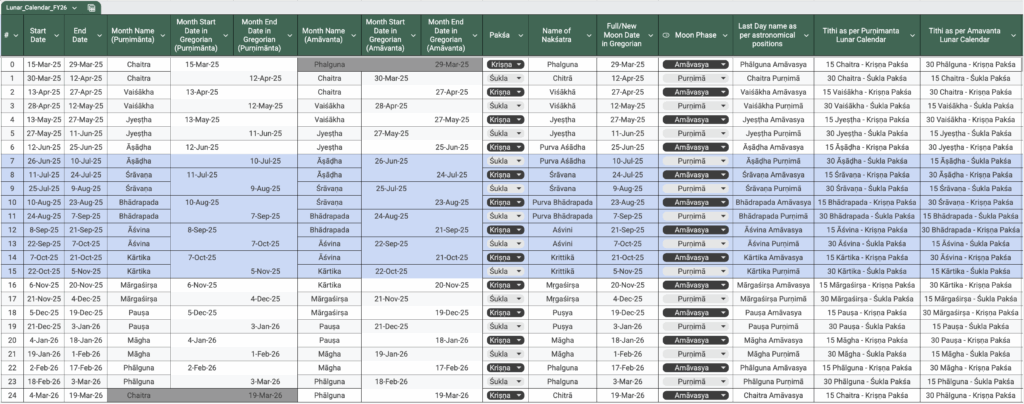
As per beliefs, the chaturmāsa (approximately highlighted in the image above) is the period when Viśṇu, i.e. The All Pervading One, rests for his rejuvenating yoga-nidrā, on the coils of the immense being called Seśa, i.e. The Remainder (also known as Ādiseśa, i.e. the Original Remainder, and even Anantanāga, i.e. the eternal serpent), in Kśīrasāgara, i.e. the Sea of Milk.
The imagery of this quite intense. The preserver of all creation, in a heightened consciousness (yoga), takes a much deserved rest (nidrā), on the coils of the embodiment of time (if you think of it), who is called the Start (Ādi), the End (Seśa) and the Eternal (Ananta), in a sea made of the most nourishing liquid we can think of (kśīra, i.e. milk).
This seems (to me) to be a promise of better times to come, as the preserver deity rejuvenates wrapped up in the coils of eternity, which itself is held up by an inexhaustible source of primal nourishment.
Two more interesting things we should note before go back to the story.
Firstly, this period roughly coincides with the time when the monsoon system has impact on the Indian subcontinent. Due to the heavy rains, and the unpredictability of season, this season is a good time to avoid unnecessary travels, as well as take dietary precautions (and even fasting, to preserve the stored victuals).
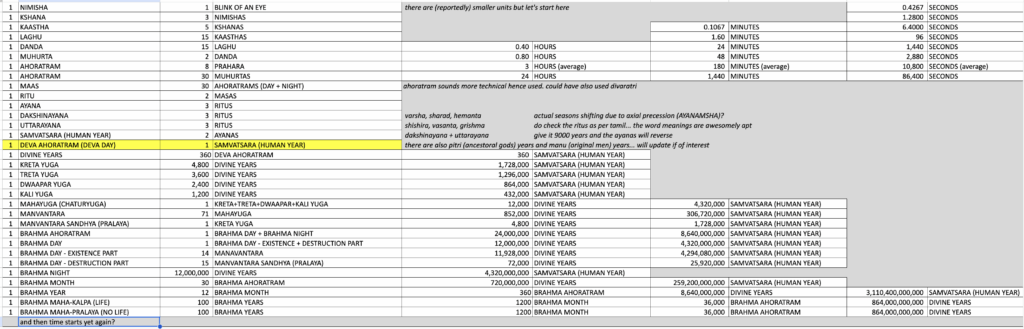
Secondly, in the way time is understood in the Indian philosophy (see the image below), a 'human' year, i.e. mānava-samvatsara of 12 months is considered as a 'divine' day, i.e. deva-ahorātram. So the 4 month period (i.e. chaturmāsa) between Devaśayani Ekādaśi and Prabodhini (or Devauthani) Ekādaśi would be roughly equivalent to 8 hours of the devas. So, the period of rejuvenation in a day is of proportionate duration, be it for humans or for the devas. Oh, and one more unnecessary factoid! Every around 32.5 months, an additional month (adhika māsa) is added in a month which does not have a sankrānti (sun's apparent transit from one zodiac sign to another). This "leap month" is to align the solar and lunar calendar, as there is a gap of a little over 11 days between the two. The adhika māsa can fall in the chaturmāsa, hence making the period longer by a month.So Viśṇu every once in a while sleeps for a period proportionate to two additional hours as per the time of devas. In 2026, though he will (sadly) not get a longer sleep, as the adhika māsa would fall in Jyesṭha month.
- Story Element 2: He made the strong (and respected) one’s responsible for the success and the protection of this yajña.
द्वादशैवसचादित्याञ्शक्रादींश्चसुरोत्तमान् । सकश्यपान्समामन्त्र्यसदस्यान्समचीकरत् ।।
The best amongst the good ones (surottama = sura + uttama) the twelve Ādityas – including The Powerful One (Śakra), i.e. Indra – along with others like The Black Toothed One, (Kaśyapa) were invited and made members of the assembly/ assistants (sadasya) in the yajña.
P14.02.08: Vāmana Purāna – Adhyāya 2 – Śloka 8
P14.02.09-11: Vāmana Purāna – Adhyāya 2 – Śloka 9-11
- Daksa invited
- The Most Excellent One (Vaśiṣṭha) along with The Giver of First Light/Knowledge (Arundhati), who were praised (śansita) for upholding their vows (vratam);
- The Envy Free (Anasuyā) he invited The Pure One (Atri);
- The Patient One (Dhṛti) he invited The Silken One, i.e. who was born in luxury (Kauśika, the birth name of Sage Viśvāmitra);
- The One Who Dispels Darkness (Gautama) with The Unblemished One (Ahalyā);
- The Bringer of Sustenance (Bharadvāja) along with The Guileless One (Amāya); and
- The Flaming/Luminous One (Angirāsa) along with The Shining One (Ćandrā).
- O, The One Who Works Towards Growth (brahman), Dakśa having invited (āmantryakṛtvādakśa) these
- knowledgeable (vidvāna),
- well endowed with good characteristics (guṇasampanna), and
- well versed in the Vedas and its parts (vedavedāngaparangāna),
- Made them participants (sadasya) in the assembly of the fire-sacrifice (yajñasansadi).
An interesting thing we should take note of, is the specific list of poets/sages (ṛṣis) mentioned as invitees, and made participants (sadasya). They are (1) Kaśyapa, (2) Vaśiṣṭha, (3) Atri, (4) Viśvāmitra, (5) Gautama, (6) Bharadvāja, and (7) Angirāsa. These are the seven sages (saptaṛṣis) who (are supposed to) serve as spiritual guides, and preserve the knowledge (vedas) in the current manvantara (the interval of the patriarch Manu - i.e. Manu + antara - or more abstractly the interval of way of thinking - i.e. manah + antara).
Before irate comments(after a quick Google search and/or AI query)erupt, the seventh name is sometimes(mostly?)given as Jamadāgni.
The two names are quite interesting in their similarity and difference.
- "Jamadāgni" means The Great/Consuming Fire, indicative of his anger, as well as of his even better-known son: The Pleasing One (Rāma) Who Wielded the Axe (ParaśuRāma).
- "Angirāsa" means The Flaming/Luminous One. His flame is less of anger, and more of the glow (tejas) that came from the penance that heats up (tapas).
If it helps, the second (Vaśiṣṭha), the third (Atri) and Angirāsa are named as the saptaṛṣis of the first (Swayambhuva) manvantara. These were (in no particular order):
(a) Marīchi (The Ray of Light),
(b) Atri (The Pure One),
(c) Angirāsa (the Flaming/Luminous One),
(d) Pulaha (The One Who Causes Goosebumps),
(e) Kratu (The Doer),
(f) Pulastya (The Smooth Haired One, and the narrator of Vāmana Purāṇa), and
(g) Vasiṣṭha (The Most Excellent One).
These "OG" saptaṛṣis are considered so important and primal that the constellation Big Dipper, which is called saptaṛṣi mandala, has stars named after them. Arundhati has a fainter star named after her which is seen next to the star named after Vaśiṣṭha, her spouse.
The remaining ṛṣis, named as invitees to Dakśa's fire sacrifice, are in someway or the other descendants of these first seven.
- The first, Kaśyapa, was the son of (a) Marīchi.
- The fourth, Viśvāmitra, was born a kśatriya, and was a king in the Dynasty of the Moon (Ćandra vaṃśa), which arose from Ćandra, who was the son of (b) Atri.
- The fifth, Gautama, was the son of Dirghatamasa, who in turn was the son of (c) Angirāsa.
- The sixth, Bharadvāja, was also a grandson of (c) Angirāsa, being the son of Bṛhaspati (the spiritual guide to the devas, i.e. deva-guru), who was the son of Angirāsa.Quick aside, Bharadvāja's mother was Mamta, who was the wife of Utathya, and the mother of Dirghatamasa.
Jamadāgni traces his lineage (in a way) to (b) Atri. His mother Satyavatī was the daughter of King Gādhi (The Strong, Firm and Eternal One), of the Dynasty of the Moon (Ćandra vaṃśa). Interestingly, Kauśika (who later became well-known as Viśvāmitra) was the son of King Gadhi, and brother to Satyavatī. On the paternal side Jamadāgni was the son of Ṛcīka, who in turn was the son of Aurva (Born of The Thigh, i.e. uru, of his mother Āruṣī), who was the son of Chyavana (The One Who Was Dropped, i.e. ćyuta, from the womb of his mother Pulomā), who in turn was the son of Bhṛgu. Now Bhṛgu was a brother to the first batch of saptaṛṣis, and was (like them) mind-born from Brahmā (The One Who Grows or Helps Grow), the Creator God. Bhṛgu is not given a place in the saptaṛṣi mandala, but the defining treatise of astronomy (and astrology) is credited to him, and called Bhṛgu Saṃhitā. He is sometimes also counted as a saptaṛṣi in the first and the current manvantara(especially when no one is keeping exact count).
Another interesting thing here, is the (meaning of the) names of the wives, who were also invited. There is a pattern to it, your thoughts on which I will eagerly await in the comments. Given the length of this aside, we won't go into it right now.
He called Dharma (The One Who Upholds) together with his wife Ahimsā (Nonviolence), and assigned them the responsibility of being the gatekeepers (dvārpāla) of the enclosure of the fire-sacrifice (yajñavāṭa). He assigned the task of collecting fuel (idhmāharaṇa) for the yajña to Ariśṭanemi (The One Whose Rim is Unhurt), an alternate name for Kaśyapa. Dakśa properly appointed (samyagdakśaprayuktavāna) the sage Bhṛgu for the hymn chanting (mantrasamskāra). The radiant (śući) and bright (deva) Ćandra along with his wife Rohiṇi, Dakśa appointed as the treasurer (dhanānāmādhipati).
P14.02.12-14: Vāmana Purāna – Adhyāya 2 – Śloka 12-14
Dharma, Ćandra and Kaśyapa (here referred to by his alternate name, Ariśṭanemi), are notable for having married multiple daughters of Dakśa.
Dharma was married to 10 (or sometimes 13) daughters of Dakśa, one of whom (Ahimsā) we have named above. The "Dharma" referred to here is the Prajāpati Dharma, one of the mind-born sons of Brahmā - just like the saptaṛṣis, Bhṛgu and Prajāpati Dakśa.There are a few who may confuse him with Yama, who is also called DharmaDeva, and is the lord of death and justice after death. DharmaDeva on the other hand, is the son of Vivasvan, one of the Adityas, i.e. son of Aditi (The Limitless One) and Kaśyapa.
The names of these wives are all after good qualities that a "righteous" person, i.e. someone who follows dharma (the correct behavior that helps uphold the cosmic order), would keep with him, just like much beloved wives. The wives were (and the qualities are) Ahimsā (non violence), Śraddhā (faith), Lajjā (modesty), Medhā (wisdom), Buddhī (intellect), Śānti (peace) and Siddhī (perfection), to name a few.
Ćandra (son of Atri, one of the OG saptaṛṣis) was married to 27 daughters of Dakśa.
These daughters are named, and denote, twenty seven constellations or nakśatras (the imperishable ones). The Moon takes a little over 27 days to orbit the Earth. Ancient Indians were good at astronomical observations. They encoded moon's movement by naming the 27 constellations, that the moon seen as going close to (or residing in their mansions), as the wives of Ćandra, the personification of the Moon. Out of these, Rohinī (specifically named in the śloka) was considered as the favourite. Reason? Amongst all the stars in these constellations, occultation of moon (i.e. the moon coming in front of, and hence hiding the star from our view) is most common with Aldebaran, the principal star of Rohinī nakśatra. This is as if, Ćandra is so enamored with Rohinī, that he holds her in a close embrace when he resides in her mansion, and hence we can't see her.
That brings us to Kaśyapa (or Ariśṭanemi), and his wives who were also daughters of Dakśa. He was married to 13 (sometimes 17, 21 or even 23) daughters of Dakśa.
The logic behind the specific names and stories of these wives is quite interesting. While humans are seen to descend from Brahmā through the first couple - Manu (the thinking one, and of the first one manvantara - specifically Svayambhuva Manu), and his wife Śatarupā (the one with hundred forms), all the other species (divine or otherwise) are mentioned as descended from Kaśyapa and these wives of his. A few of them are:
1. Aditī (The Limitless One) - Devamātā, mother of Adityas (Devas)who denote the bright (mostly beneficial) powers we see above us
2. Ditī (The Limited One) - mother of Daityas - enemies of the Devaswho denote the powers we fear are hidden below us
3. Danu (The Dripping/Fluid One) - mother of Dānavas -enemies of the Devas who denote the powers we fear are hidden in deep waters
4. Vinatā (The Humble One) - mother of Garuda and Aruna and through them all the avian species
5. Kadru (The Covetous One) - mother of the nāgas, the feared yet respected individuals (like Takśaka, Vasuki et al) who are sometimes(may be erroneously, see next name)equated with snakes
6. Surasā (The Flavoured/Eloquent One) - mother of snakes
7. Surabhī (The Fragrant One) - mother of cows and other bovine species
8. Muni (The Silent One) - mother of apsarās, who are represented as beautiful dancer/courtesans who entertain devas(but who, as per my understanding, represent smaller clouds and fresh water lakes that refresh and provide pleasure, or may be fresh water fishes)
9. Ariśṭā (The Unharmed One) - mother of gandharvas, who are represented as musicians and physicians who entertain and serve the devas along with the apsarās(but who, again as per my understanding, represent the species of plants and flowers found in the wild that provide pleasure as well as have medicinal characteristics)
10. Irā (Earth/Speech) - mother of trees, plants, flowers and herbs
11. Krodhavaśā (Ruled by Anger) - mother of the fierce wild animals
As more species were discovered in real-life (or invented in story) more names were added in the list, or denoted as daughters of existing named wives.
This extract of the long list of sons-in-law and daughters of Dakśa (and their children) may feel a little self-indulgent(which it definitely is)of the storykeeper. Nonetheless, it is important when seen in conjunction with the next śloka (and the next story element). THAT makes the following actions of all the participants of this tragedy even more poignant.
- Story Element 3: He called all his daughters, son-in-laws and their children, but specifically left out Sati and Śiva from the invitee list.
जामातृदुहितृश्चैवदौहित्रांश्चप्रजापतिः । सशङ्करांसतींमुक्त्वामखेसर्वानन्यमन्त्रयत् ।।
“The One’s Connected by Marriage (jāmātṛ), i.e. sons-in-law and Those Who Helped Milk the Cows (duhitṛ), i.e. daughters along with the children of the daughters (dauhitra) were all invited (sarvānanyamantraya) by The Master of Creation (prajāpati), i.e. Dakśa, in the gathering together (makha), other than The Truthful One, i.e. Satī, along with The One Who Does Good, i.e. Śankara, (saśankarānsatīnmuktwa).
P14.02.15: Vāmana Purāna – Adhyāya 2 – Śloka 15
A quick clarification before confusion raises itsbeautifulface: Dakśa did have sons. Then why were THEY missing from the invitee/participant list, the more involved readers may ask. That gives me an occasion to go into one of my favourite story-lets; not a full blown story, but with promise to become an awesome one.
For that we would need to go a little back. Actually way back, i.e. to start of creation.
At the very start, Brahmā decided to start the task of creation.
The first batch he made were four individuals. They were Sanaka (The Ancient One), Sanātana (The Eternal One), Sānandana (The Ever Joyful One) and Sanatakumāra (The Ever Youthful One). They were asked to, but refused to, be a part of the creating process. They decided to work towards internalizing knowledge and wisdom, keeping themselves apart from worldliness. Hence they remained - in spirit and appearance - as young children. They are together called the Kumāras, i.e. The Young Ones.
Next was the legendary audience of Vāmana Purāṇa, i.e. Nārada. He too decided to keep himself away from worldly duties. He was more interested in getting, discussing and disseminating knowledge.Sometimes this "knowledge" is caricatured as gossip.
The Kumāras and Nārada are together called The Quiet Ones, or munis.
Next created batch of individuals were a little more worldly. These include the original sapataṛṣis, the "stars": Marīchi, Atri, Angirāsa, Pulaha, Kratu, Pulastya, and Vasiṣṭha) and their star-gazing brother, Bhṛgu. In addition there was one more brother, The One of (or worshipper of) Fire, i.e. Atharvan. They were together known as the poets, or ṛṣis. They were ready to help in the process of creation, and started preparing themselves by doing intense tapas (penance that heats up).
Brahmā, showing his indefatigable nature, then created another batch of individuals even more well suited to the process of creation. They were Dakśa (The Skilled), Kardama (The Shadow), Rući (The Interest) and Dharma (The Upholder). They were given the epithet of The Masters of Creation, or Prajāpatis.
In between, as per some stories, Brahmā created The One Who Makes Cry, or Rudra. This is a form of Śiva. Rudra was very powerful, and started creating individuals who were quite powerful and not subject to pain, disease or death. Seeing this Brahmā asked Rudra to stop, or atleast put some limits or expiry dates for his creations. Rudra refused to put limits on anything HE created. Instead he stopped creating.
If you note all of these were males. Then Brahmā who is Created by Self, or Svayambhu, decided that the right way of creation would be which involved males and females. So, he created a Thinking One, or Manu, from himself. He was the first of his kind, and being the "son" of Svayambhu, was called Svayambhuva Manu, i.e. The Thinking One Who Came from Svayambhu. In fact all the Manu's are referred to be their fathers' names, like the current (and seventh) one is calledd Vaivasvata Manu, or The Thinking One Who Came from Vivaswan (one of the Ādityas). In addition, Brahmā created the first female. She was called Śatarūpā, or The One With a Hundred Forms.
Manu and Śatarūpā had two sons (whose stories I hope we can discuss later, but not now), and three daughters. The daughters were named Akuti (The Princess), Devahuti (The Invocation to the Bright Ones) and Prasuti (The Pregnant One). Akuti was given in marriage to Rući Prajāpati. Devahuti was made wife to Kardama Prajāpati. Prasuti was married to Dakśa Prajāpati. We will explore the genealogy of Kardama Prajāpati and Rući Prajāpati - as both became fathers to the first two "born" avatārs of Viṣṅu (one each). Right now, let us get back to Dakśa.
Now the fun story begins.
I hope you all have paid attention to the fact that other than Śatarupā and her three daughters, the creation was predominantly peopled by males.
Sadly, Dakśa did not pay attention, and from the womb of(the aptly named)Prasuti, he fathered many sons. The numbers vary, from mere 50 to a whopping 11,000. Let's go with the higher number, as why not.
First the happy couple were blessed with 10,000 sons. They were together called the Haryaśvas, or The Ones With Bright/Golden Horses. These horsemen were quite interested in taking up the reins of creation. The wise Nārada intervened(I wonder why). He came to his nephews, while his brother wasn't paying attention. He asked them their intent. The nephews affirmed their birthright to take up the task of taking the creation forward, and may be make it better. Nārada (may be shaking his head avuncularly) asked them to atleast explore the whole of creation, before trying to change/improve it. The Haryaśvas went exploring. They haven't be heard back from.
While waiting for their first-born sons to return, Dakśa and Prasuti were blessed with 1,000 more sons. They were called the Sabalaśvas, or The Ones With Mottled Horses. They were fewer and their horses less impressive. Again Nārada had a quick conversation with his nephews, and these sons of Dakśa went wandering into the world, and are still awaited.
After finding this out, Dakśa cursed Nārada to also roam about (like he sent his nephews) and never having a single abode. Brahmā understood the intent behind Nārada's mischief, and converted the curse to a boon. Nārada thenceforth could travel at will to all places, and also be welcome wherever he goes. This boon and Nārada's character of solving problems by creating newer problems is a narrative device in many tales.
Dakśa also understood the intent behind this episode, or may be it was explained to him by Brahmā. After that Dakśa only had daughters. The numbers vary, and as per different sources can be 16 , 24, 40, 50, 60 or 101.
These daughters were then married to various individuals, and they are the true jagatamātās, the mothers of the world.
Dakśa, by inviting all his daughters and the sons-in-law, along with the grand-children, invited the whole of creation to this family gathering. This makes the specific exclusion of Śiva and Sati all the more pointed. A deliberate act rather than an oversight, and one that shifts the event from a ritual gathering into a stage set for conflict.
This act of “omission” was not lost on Nārada, and he interjects:
नारद उवाच
किमर्थम् लोकपतिना धनाध्यक्षो महेश्वर: । ज्येष्ठ: श्रेष्ठो वरिष्ठोऽपि आद्योऽपि न निमन्त्रित: ।।
Narada said, “Why was the lord of the worlds (lokapati), overseer of wealth (dhanādhyakśa), the great Lord (maheśvara) not invited, when he was the foremost (jyeśṭha), the best (śreśṭha), the very first (ādya)?”
P14.02.16: Vāmana Purāna – Adhyāya 2 – Śloka 16
Let us explore in detail the remaining part of Adhyāya 2, which has the answer that Pulastya gave to this valid question which is based on a (sadly lesser known) story, which sets up the overarching rivalry between two ace archers, in the longest epic of Indian stories.
Quick asides to clarify:
1. Different texts classify Kumāras as brahmarṣis, Nārada as devarṣi, but all fall under muni as ‘those who are inward-turned / silent’.
2. The ecological interpretations about apsarās and gandharva are mine, and should not be taken (or quoted) as canonical.
After Chapter 1, beginning to feel the flow in Chapter 2.
The confluence of Astrology and Mythology is amazing…whom shall I praise? The writer or the Translator?
Can wait for the next.
And eager to know the pattern to the names of the wives. One guess is the qualities of the wives are derivatives of those from the husbands….or pre-requisites…?